 AUG (Authorized User Group) Certified
 Nasscom Certified
 SNA Certified
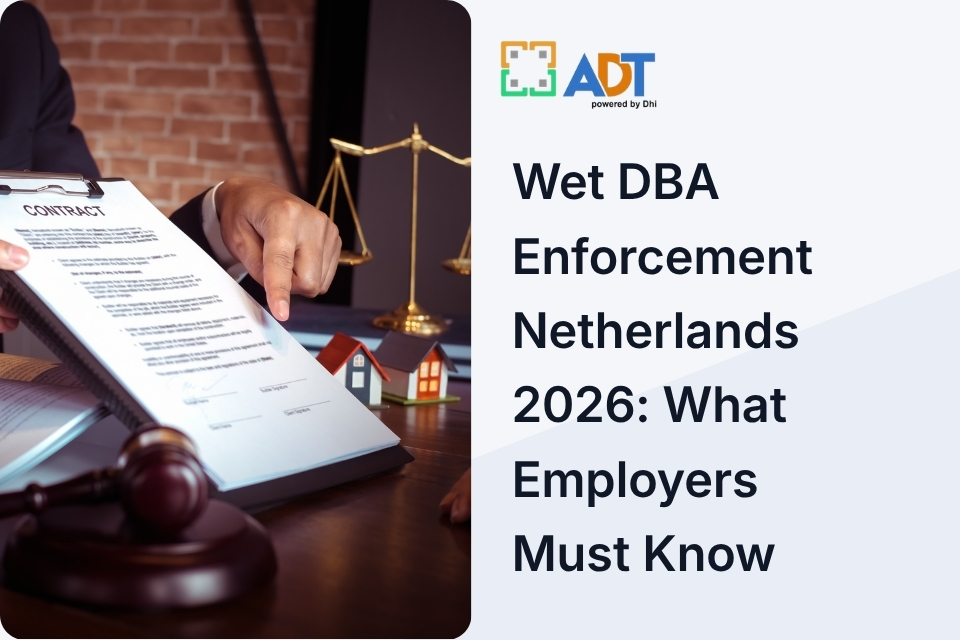

Your company hired a contractor in the Netherlands two years ago.
The arrangement has been working well & the contractor sends an invoice every month, your finance team processes the payment, and the work gets done.
So there hasn't been much reason to question it.
But what if that person is now working almost exactly like one of your employees?
Perhaps they attend the same team meetings, report to the same manager and work regular hours. The contract still says they're self-employed, but the way they work has changed.
That could become a problem under the Netherlands' Wet DBA rules.
When the Dutch Tax Administration (Belastingdienst) resumed enforcement on 1 January 2025, many employers expected a sharp increase in inspections.
That didn't happen.
During 2025, the Tax Administration carried out 842 company visits and 237 full audits. The number of visits was broadly similar to previous years.
So what actually changed?
The important difference is what the Tax Administration can do when it finds that someone working as a contractor should have been treated as an employee.
For companies hiring in the Netherlands, that can mean unpaid payroll taxes, additional costs and difficult decisions about how to employ people going forward.
What changed in Wet DBA enforcement in the Netherlands in 2026?
The rules used to decide whether someone is genuinely self-employed haven't fundamentally changed.
What has changed is how those rules are being enforced.
In 2025, the Tax Administration could ask businesses to correct their payroll records and pay outstanding payroll taxes if a contractor was found to be working as an employee.
From 1 January 2026, penalties can also apply in cases involving deliberate wrongdoing or gross negligence. Ordinary default penalties remain suspended during 2026.
There is another change worth knowing about if your company hires contractors through recruitment agencies or brokers.
The Tax Administration is paying more attention to these arrangements, and using an agency doesn't automatically mean your company has nothing to worry about.
So how do you know whether a contractor arrangement needs reviewing?
Start with how the person actually works.
Who decides their working hours? Does someone in your company manage their daily tasks? Can they decide how to complete the work themselves?
These questions matter because having a signed contractor agreement doesn't automatically mean the person is legally self-employed.
What could contractor misclassification cost your business?
Imagine you hired someone in the Netherlands for a three-month project.
The project went well, so you extended their agreement. Over time, they started taking on more responsibilities and became part of your regular team.
Two years later, they're still sending invoices, but they work under your manager and handle the same kind of ongoing work as your employees.
Nobody has questioned the arrangement, so your company continues as usual.
Then the Tax Administration reviews the relationship and decides that the person should have been treated as an employee.
What happens next?
Your business may have to pay payroll taxes and applicable social contributions that should have been paid earlier. Depending on the circumstances, penalties may also apply.
For enforcement relating to arrangements from January 2025 onwards, back assessments can generally reach back to 1 January 2025, subject to the applicable rules.
That means the longer a potentially misclassified arrangement continues, the more financial exposure your company may build up.
For HR and finance teams, the difficult part is that nothing necessarily looks wrong until someone reviews the relationship.
This is why it's worth checking your existing contractor arrangements rather than waiting for an inspection.
If you're unsure where to begin, Dhi ADT can help you review how your Dutch contractors work, identify arrangements that may need attention and understand what your options are.
Book a 30-minute review with the Dhi ADT team: https://calendly.com/experts-adtsolution/30min
How can foreign companies reduce Wet DBA compliance risks?
If your HR or finance team is based outside the Netherlands, you may not always know how a contractor works on a daily basis.
You might have the agreement, payment records and project details, but the local manager may be the only person who knows how much direction the contractor receives.
That gap can make it harder to understand whether the arrangement is appropriate.
So before making any changes, there are a few things worth checking.
Does the contractor actually work independently?
Look at who decides their hours, how their tasks are managed and whether they have the freedom to organise their own work.
Someone who manages their own projects and works with several clients may have a different working relationship from someone who follows your company's regular schedule and reports to a manager every day.
Has the relationship changed since the person was hired?
A contractor may have joined for a short project but stayed for several years.
If their responsibilities have changed, the original agreement may no longer reflect how they work.
Can your company explain why the person is self-employed?
Keep records of the arrangement and the reasons behind your decision. This can help if the Tax Administration asks questions later.
There is also a proposed €38 hourly threshold linked to a legal presumption of employment for certain lower-paid contractors. The final legal position and commencement date should be checked against current Dutch guidance.
The main point is that you don't need to assume every contractor arrangement is wrong. You need to understand how each relationship works before deciding whether anything should change.
Should you keep your Dutch contractors or move them to employment?
This is where many businesses face a practical decision.
You may have someone who has worked with your company for years, understands your operations and plays an important role in your team.
You want to keep working with them, but you're not sure whether continuing as a contractor is the right option.
Does that mean you have to move them onto payroll?
Not necessarily.
If someone genuinely runs an independent business, works with other clients and decides how to deliver their services, a contractor arrangement may still be suitable.
But if the person works under your direction and has become part of your regular team, employment may make more sense.
For international companies, that creates another question.
What if you want to employ someone in the Netherlands but don't have a Dutch entity?
Setting up a company just to hire one person may not be practical, especially if you're still exploring the market.
An Employer of Record (EOR) can be one option.
An EOR can employ the person locally, provide the employment contract and manage payroll and relevant employment obligations, while your business continues to manage their work.
This can help companies move someone into employment without immediately setting up their own Dutch entity.
However, an EOR isn't necessary for every situation. You still need to consider employment costs, any immigration requirements and whether the arrangement fits your plans in the Netherlands.
The useful question isn't simply whether an EOR or a contractor is cheaper.
It's which arrangement makes sense for the way the person actually works and what your business needs.
What should companies prepare for before January 2027?
The remaining temporary enforcement measures are expected to end on 1 January 2027, with ordinary default penalties scheduled to return.
For companies that haven't reviewed their contractor arrangements since enforcement resumed, this is a good reason to start.
You don't need to review every agreement from scratch on the same day.
Start with people who have been working with your company for a long time, contractors whose responsibilities have grown beyond the original project and arrangements where nobody is completely sure how the person should be classified.
Then look at whether the contract matches the actual working relationship. If it does, you may only need to make sure your records are up to date.
If it doesn't, you can consider whether the working arrangement needs to change or whether employment would be more appropriate.
Making that decision now gives your company more time to understand the costs and responsibilities involved.
Bottom line
A year after Wet DBA enforcement resumed, the number of inspections hasn't increased as dramatically as many employers expected.
But that doesn't mean every contractor arrangement is safe.
You may have people who started as independent contractors and gradually became part of your regular team. Their agreements may not have changed, even though their responsibilities have.
And if the Tax Administration later decides those relationships should have been treated as employment, your company could face costs that have been building up over time.
So before extending another contractor agreement, it's worth asking whether the arrangement still reflects how the person works today.
You may find that continuing with a contractor is perfectly appropriate. Or you may decide that employment is a better option.
Either way, it's easier to make that decision when you have time to review the relationship properly rather than having to respond to an inspection.
If you're reviewing contractor arrangements in the Netherlands or considering moving someone into local employment, Dhi ADT can help you understand the available options and what they mean for your business.
Get in touch with us:
Netherlands (HQ) : +31 97010207974
UK (HQ) : +44 7401131349
Belgium : +32 460254634
Follow us on:
LinkedIn : https://www.linkedin.com/company/dhi-adt/





_1790144161.jpg)







 experts@adtsolution.com


 Queens towers, Delflandlaan 1, 1062 EA Amsterdam, The Netherlands



Comments (0)
No comments yet. Be the first to comment!