 AUG (Authorized User Group) Certified
 Nasscom Certified
 SNA Certified
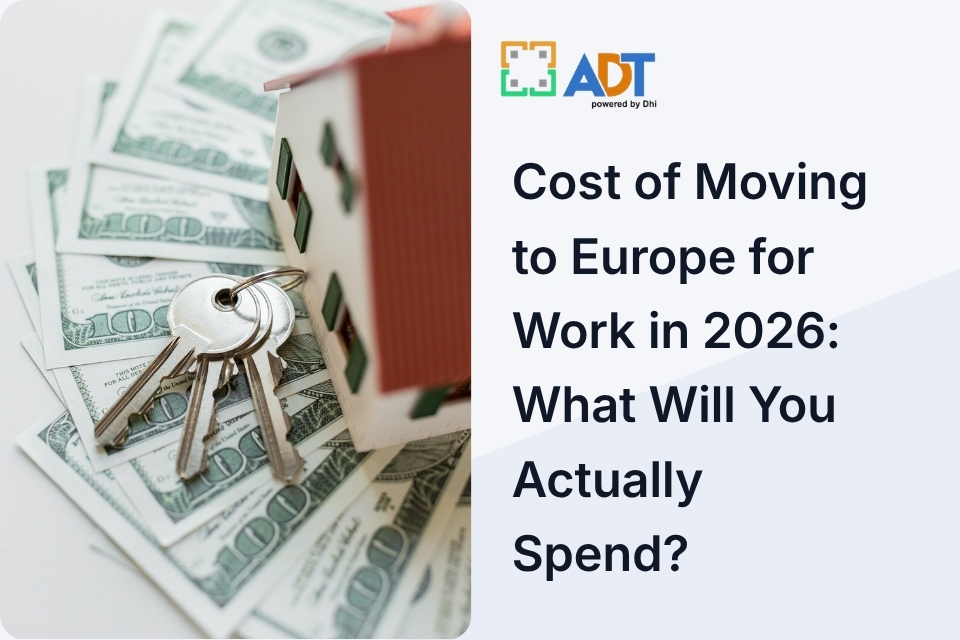
You've received a job offer in Europe, and now you're trying to work out how much money you'll need before you move. You've probably checked the visa fee, looked at flight prices and searched for apartments to get an idea of the rent.
But have you thought about how much money you'll need before your first salary actually reaches your bank account?
Imagine you've accepted a job in Amsterdam. Your employer is taking care of your work permit, and you've saved enough for your flight and first month's rent.
Then you find an apartment you like, but the landlord asks for two months' deposit along with the first month's rent.
If the apartment costs €2,300 a month, that's €6,900 you need to arrange before you can move in. And you still have to pay for health insurance, household essentials and everyday expenses while waiting for your first salary.
What if your employer only provides two weeks of temporary accommodation? What if finding a permanent apartment takes longer? And what happens if your first salary is lower than you expected? These are the questions that often come up after someone has already accepted a job offer.
The cost of moving to Europe for work isn't just about getting your visa approved or booking a flight. You also need to understand how much money you'll need during your first 60 days and which expenses your employer is willing to cover.
If you're moving from India to the Netherlands, Germany or the UK with a job offer already in hand, here's what you should work out before making the move.
How much does the visa actually cost you?
The visa is usually one of the first expenses people check after receiving a job offer. But depending on where you're moving, the amount you need to pay can be quite different.
And before you pay anything, it's worth asking your employer whether the visa and permit fees are already included in your relocation package.
Germany
If you've received a job offer in Germany, the national visa application generally costs €75. After arriving, you may also need to pay around €100 for your residence permit, depending on the permit you're applying for.
That means you could be looking at approximately €175 in government fees for this example. If you're applying for an EU Blue Card, check the applicable residence permit fee and whether your employer will help you complete the application.
Germany also offers a fast-track procedure for skilled workers, which involves an additional €411 fee. Your employer initiates this procedure, so ask whether the company will cover the cost.
When you're calculating how much a work visa costs in Germany, remember that these are only the immigration fees. You'll still need money for accommodation, insurance and your first few weeks in the country.
Netherlands
If your employer is sponsoring you through the highly skilled migrant route, the permit application fee is €423 in 2026. Many employers arrange and pay for this application because they are responsible for submitting it.
But it's still worth checking whether the fee is covered under your offer. If your spouse or children are moving with you, ask whether their immigration applications are included too.
You don't want to find out later that the company is covering your permit but expects you to pay for your family's applications.
UK
If you're moving to the UK, this is where you need to pay closer attention to the upfront costs.
For a standard Skilled Worker visa application made outside the UK for up to three years, the application fee is £819 under the fee schedule effective October 2026. You'll also generally need to pay the Immigration Health Surcharge, which is £1,035 per year for most adult applicants.
For a three-year visa, that comes to £3,105 in health surcharge payments. When you add the application fee, the total is £3,924 for one adult, using this example.
And unlike a monthly expense that you can pay after starting work, these immigration costs are generally due before you travel. If your family is moving with you, the amount can increase considerably.
Adult dependants generally pay the same annual health surcharge, while the rate for children is £776 per year. Each dependant may also need a separate visa application.
You may also need to show that you have enough money to support yourself when you arrive. For a standard Skilled Worker application, the maintenance requirement is generally £1,270, unless an exemption applies or your employer certifies maintenance.
That amount is not an additional government fee, but it may still affect how much money you need available when applying. Here's something worth checking with your UK employer.
Your employer is responsible for certain sponsorship expenses, including the sponsor licence fee and Immigration Skills Charge. These costs cannot simply be passed on to sponsored workers.
Some employers also cover the employee's visa application fee and Immigration Health Surcharge. So before accepting your relocation package, ask your HR team exactly what the company will pay for.
If you're moving with family, ask whether the same support applies to them. You may find that your employer is prepared to cover a significant amount of the immigration expenses, but it's better to have that confirmed in writing.
What will you actually pay before your first full salary arrives?
Let's say your visa has been approved and you're getting ready to move. Your employer has confirmed your joining date, you've started looking at apartments and you're trying to work out how much money to keep aside.
This is where you need to look beyond the visa and flight costs. Even if your employer is paying for both, you may still need several thousand euros of your own savings before receiving your first full salary.
Housing deposit
Imagine you're moving to Amsterdam and you've found an apartment with a monthly rent of €2,300. If the landlord asks for a deposit equal to two months' rent, that's €4,600 you need to pay before moving in.
You'll also need to pay your first month's rent, bringing the total to €6,900. In the Netherlands, the deposit for most new residential tenancy agreements cannot exceed two months' basic rent.
So if you're wondering how much deposit landlords ask for in Amsterdam, the amount depends on the property, but you should also know the legal limit before agreeing to pay.
Letting agent fee
You may come across letting agent fees while searching for accommodation, especially when comparing rental processes across different countries.
But don't assume every fee you're asked to pay is allowed. In the Netherlands, an agency working for the landlord generally cannot also charge the tenant a brokerage fee for arranging the same rental.
If you're asked to pay an agency fee, check who the agency represents and whether the charge is permitted. This is particularly important when you're arranging accommodation from India and may not be familiar with local rental rules.
First month's rent
Most landlords will expect you to pay the first month's rent before moving in. When you combine this with the deposit, you can see how quickly your savings may be used.
For example, an apartment costing €2,300 per month with a two-month deposit would require €6,900 upfront. That's before you've bought furniture or paid for other moving expenses.
Temporary accommodation
What happens if you arrive in Germany or the Netherlands but haven't found a permanent apartment?
You'll need somewhere to stay while you continue looking. Let's say your employer offers two weeks of temporary accommodation, but it takes you six weeks to find a suitable rental.
That means you'll need to pay for another four weeks of accommodation yourself. Depending on the city and type of accommodation, this could become a significant expense.
That's why it's worth asking your employer how long temporary housing is provided and whether an extension is possible.
Health insurance
If you're moving to the Netherlands, you'll generally need to arrange Dutch basic health insurance.
For budgeting purposes, monthly premiums are around €159 on average in 2026, although the amount depends on the insurer and policy you choose.
There's also a standard annual deductible of €385 for many covered healthcare costs. This is not an additional monthly premium, but it is something to account for if you need medical care.
In Germany, if you're covered by statutory health insurance, your employer generally contributes around half of the health insurance cost. So when you're comparing salaries between countries, remember that your insurance expenses may be different too.
Setting up your home
You might find an apartment that fits your budget, only to realise that it doesn't come with everything you expected. Some rental properties in the Netherlands are offered without flooring, curtains or light fittings.
You may also need to buy a bed, kitchen equipment, furniture and other household essentials. If you're moving with family, these costs can increase because you'll need to set up a home for more than one person.
Before signing a rental agreement, ask what's included in the property so you know what you'll need to buy.
Documents
If you're moving from India, you may need apostilles, document legalisation or certified translations for your degree certificate, birth certificate or marriage certificate. The exact requirements depend on your destination country, immigration route and family situation.
If you're moving with your spouse or children, you may need to prepare additional documents for them. Try to find out which documents are required before leaving India, particularly if they need to be issued or authenticated by Indian authorities.
Flights
Finally, remember to include flights for yourself and anyone travelling with you. If your employer is covering travel expenses, ask whether the benefit includes your family and whether you need to pay upfront and claim reimbursement later.
So how much money should you actually save?
There's no single amount that works for everyone moving to Europe. Someone moving alone to Germany with employer-provided accommodation may need a very different budget from someone moving with their family to Amsterdam.
But if you're moving to a major European city, you should be prepared for the possibility of needing several thousand euros during your first two months. Rather than guessing, work out the amount you'll need for your deposit, first month's rent, temporary accommodation, insurance, documents and everyday expenses.
Then subtract only the expenses your employer has confirmed they'll cover. That will give you a much more realistic idea of the relocation savings needed.
Why is your first payslip smaller than you expected?
You've accepted a job in the Netherlands, and your employment contract clearly mentions your monthly salary. Before moving, you've already calculated how much you expect to receive after tax and how much you'll spend on rent.
But when your first payslip arrives, the amount in your bank account is lower than you expected. Naturally, you're going to wonder whether something has gone wrong. There can be several reasons for this, including your joining date, payroll deductions, tax withholding or missing registration details.
One thing worth checking is whether your employer has all the information needed to process your salary correctly. In the Netherlands, employees generally need a citizen service number, known as a BSN, for payroll administration.
In Germany, employers need the relevant payroll tax information, including your tax identification number, to apply the correct withholding details. If that information isn't available or cannot be verified, different payroll withholding rules may apply.
For example, the Netherlands has an anonymous payroll tax rate that can apply in certain situations when required employee information is missing. In Germany, missing or unavailable tax details can sometimes result in Tax Class VI being applied.
This doesn't mean everyone moving to Europe will automatically pay the highest tax rate during their first month. But if your payroll information isn't ready, your take-home salary may be affected.
Can you get the extra tax back?
If too much tax has been withheld, it may be possible to correct the amount through payroll or a tax return, depending on the circumstances. But even when the money can be recovered later, you may still need to manage with a lower payment in the meantime.
And that can be difficult when you've just spent a large amount on relocation. Now here's where accommodation can make things more complicated. When you move to a new country, you'll usually need to complete certain registration steps after arriving.
In the Netherlands, for example, resident registration is connected to your municipality and address. But finding a permanent apartment can take time, especially in cities such as Amsterdam.
In Germany, some landlords may ask for a local credit report, which can be difficult to provide when you've only just arrived. So while you're looking for accommodation, you may also be trying to complete your registration, arrange a bank account and make sure your employer has the right payroll details.
That's quite a lot to manage while settling into a new job. There are two things worth checking before you leave India.
First, ask whether the temporary accommodation your employer is providing can be used for local address registration. Not every hotel or serviced apartment qualifies, so confirm this before making arrangements.
Second, if you're moving to the Netherlands, ask whether registration through the Non-Residents Records Database, known as RNI, is suitable for your situation. Eligible people can obtain a BSN through RNI registration without first having a permanent Dutch address. However, this does not replace the normal registration requirements for people who will be living in the Netherlands as residents.
Knowing which registration route applies to you can help you prepare the right documents and avoid unnecessary confusion after arriving. If you're wondering why your first salary in the Netherlands is lower than expected, ask your employer or payroll team to explain the deductions and check whether your registration and tax details have been processed correctly.
And if you've already received a job offer but aren't sure how much money you'll actually take home after tax, insurance and relocation expenses, it's worth working through those numbers before you move.
At Dhi ADT, we help professionals who already have a European job offer prepare for the practical side of relocating, including documents, housing, registration and the costs they should plan for.
We can help you understand which expenses may come up, when you'll need to pay them and what relocation support you should discuss with your employer.
What does it cost in the Netherlands, Germany and the UK?
If you've received offers from more than one European country, you might be tempted to compare them based on salary alone. But a higher salary doesn't always mean you'll have more money available after relocating.
You also need to think about how much you'll spend before starting work and what your monthly expenses will look like once you've settled in. Here's how the main costs compare for someone planning to move alone for a three-year job.
Germany
If you're moving to Germany, the national visa and residence permit fees may come to around €175, depending on your immigration route. If you're covered by statutory health insurance, your employer generally contributes towards the cost.
Your larger expenses may come from housing, temporary accommodation and setting up your home. So when you're calculating the moving to Germany for work cost, don't stop at the immigration fees. Think about how much money you'll need before you find a permanent apartment and receive your first full salary.
Netherlands
If you're moving to the Netherlands through the highly skilled migrant route, the permit application fee is €423 in 2026. Your employer may cover this, but you'll still need to plan for accommodation and health insurance.
For example, if you're moving to Amsterdam and renting an apartment for €2,300 a month, the deposit and first month's rent could require €6,900 upfront.
You'll also generally need Dutch basic health insurance, with premiums averaging around €159 per month in 2026. There's another factor worth checking when reviewing your salary. The Netherlands offers an expat tax benefit commonly known as the 30% ruling.
If you're eligible, it can allow part of your salary to be paid tax-free for a limited period, subject to the applicable conditions. That could make a difference to your take-home salary, but you shouldn't assume you'll receive it simply because you're moving from India.
Ask your employer whether you're eligible and how the benefit has been reflected in your salary offer. When you're calculating the moving to Netherlands from India cost, include the permit, housing deposit, health insurance, registration expenses and any relocation support your employer has agreed to provide.
The UK
If you're moving to the UK, immigration costs may take up a larger part of your initial budget. For a standard three-year Skilled Worker visa application made outside the UK, the example application fee and adult Immigration Health Surcharge total £3,924 under the October 2026 fee schedule.
If you're moving with family, the costs can increase significantly. But before deciding how much money you need, ask whether your employer is covering these expenses. Some employers pay for the visa and health surcharge, while others provide only partial relocation support.
So how should you compare two job offers?
Imagine you've received an offer from Germany and another from the Netherlands. The Netherlands offer might have a higher salary, but your rent and insurance costs could also be higher. Or you might receive a good offer from a UK company but need to arrange several thousand pounds for immigration expenses before travelling.
Instead of comparing only the gross salary, ask what you'll actually receive after tax and deductions, how much you'll spend each month and what you'll need to pay before your first salary arrives. That will help you understand which offer makes financial sense for your situation.
What should you ask your employer to cover?
If you've already received a job offer, you might feel uncomfortable asking your employer for additional relocation support. But these are normal questions to raise before accepting a package, especially when you're moving to another country.
You don't have to assume every expense will be your responsibility.
Here are six things worth discussing with your HR team.
Visa and permit fees
Ask whether your employer will pay for your visa application, residence permit and any related expenses for your family. If you're moving to the UK, specifically ask whether the Immigration Health Surcharge is included. You should also check whether the company pays these expenses directly or expects you to pay first and claim reimbursement later.
That difference matters when you're trying to manage your savings. Temporary accommodation, and for how long Let's say your employer offers two weeks of temporary accommodation.
That sounds helpful, but what happens if you haven't found a permanent apartment by the end of those two weeks?
You'll need to arrange and pay for somewhere else to stay while continuing your housing search. If possible, ask whether your employer can provide four weeks or more, particularly if you're moving to a city where finding housing can take time.
Also ask whether the temporary accommodation can be used for local registration. Having suitable accommodation arranged before arrival may make some of your early administrative steps easier. Help with the housing search
Finding accommodation in a new country can be difficult when you don't know the local rental process. You may be asked for documents such as proof of income, an employment letter or local credit history. If you're moving to Germany, for example, you may not yet have the credit history some landlords expect.
Ask whether your employer can help you find accommodation, provide supporting documents or connect you with a relocation partner. This can make the process easier, especially when you're arranging everything from India. A relocation or settling-in allowance
Some employers provide a fixed amount to help cover moving expenses, such as the housing deposit, furniture and other essentials.Others reimburse expenses after you've paid them.Before accepting the package, ask how much support is available, which expenses qualify and when you'll receive the money.If you need to pay a large deposit before your employer reimburses you, you'll still need enough savings to cover that amount.
Flights
Ask whether your employer covers your flight and whether the same benefit applies to your spouse or children.It's also worth checking whether the company books the tickets or expects you to arrange them yourself. Support with registration
After arriving, you'll need to complete different registration steps depending on the country.
In the Netherlands, this may include municipal registration and obtaining your BSN.
In Germany, you'll need to arrange address registration and complete the relevant tax and residence procedures.
Ask whether your employer or relocation partner can help you prepare documents, understand the process and arrange appointments. When you're also trying to settle into a new job, having someone guide you through these steps can make a difference.
And there's one more question worth asking if you're moving to the Netherlands. If you're eligible for the 30% ruling, ask your employer how the planned reduction to 27% from January 2027 could affect your take-home salary. The impact depends on when your ruling started and which transitional arrangements apply.
Not everyone receiving the benefit will be affected in the same way. If you're joining in late 2026, ask your HR or payroll team to explain what your net salary could look like in 2027. That way, you'll understand what you're agreeing to beyond your first few months.
Bottom line
If you've received a job offer in Europe, you've probably already checked the salary and started planning your move. You may even know exactly how much your visa and flight will cost. But before you make any major payments, ask yourself whether you've worked out how much money you'll need during your first 60 days.
Because once you arrive, you may need to pay a housing deposit, first month's rent, insurance and other expenses within a short period. And if your first salary is delayed, reduced because you joined partway through the month, or affected by payroll deductions you weren't expecting, you'll need enough savings to manage until everything is sorted out.
Before leaving India, make sure you understand which expenses your employer will cover, how long your temporary accommodation is available and which documents you need to prepare. If you're receiving a relocation allowance, confirm when it will be paid.
And if you're moving with family, make sure you've included their visa, travel, accommodation and everyday expenses in your budget too. You already have the job offer. Now the important part is making sure you're ready for everything that comes after it.
That's where Dhi ADT's Talent Mobility Services can help. We support professionals who already have a European job offer with the practical steps involved in relocating, including documentation, visa coordination, housing, registration and settling into a new country.
Our role isn't to find you a job. It is to help you prepare for the move you've already worked towards, so you have a clearer understanding of what needs to happen before and after you arrive.
Get in touch with us:
Netherlands (HQ): +31 97010207974
UK (HQ): +44 7401131349
Belgium: +32 460254634
Follow us on:




_1790144161.jpg)







 experts@adtsolution.com


 Queens towers, Delflandlaan 1, 1062 EA Amsterdam, The Netherlands



Comments (0)
No comments yet. Be the first to comment!