 AUG (Authorized User Group) Certified
 Nasscom Certified
 SNA Certified

The global employment blog
Practical guides on EOR, global payroll, immigration, and employment compliance — written for the HR directors, CFOs, and founders actually doing the hiring.
Three guides worth starting with, chosen by our team.

Wet DBA Compliance Netherlands: Is Your Contractor Agreement Still Enough?
Your contractor agreement hasn't changed in two years. But has the contractor's work stayed the same? Maybe you hired someone in the Netherlands for a six-month project. Now they're still working with your team, attending meetings and handl...
AI in HR Compliance: When Everything Looks Correct, but Something Is Still Wrong
Let's say your company is hiring someone in the Netherlands. Your HR team has prepared the employment contract, and you've used an AI compliance tool to check whether anything is missing. The tool reviews the document and finds no obvious i...

The Belgian Platform Rule That Judges What You Could Do, Not What You Did
Your contractor arrangements may look fine in practice. But what does your platform actually have the power to do? Let's say your company runs a freelancer marketplace that operates in Belgium. You have independent contractors using your pl...

The 6-Market EU Hiring Library Is Complete: What We Learned Along the Way
Most companies treat " hiring in Europe " as one decision. It isn't. It's six or more separate decisions wearing the same trench coat. We've built this hiring library one market at a time Netherlands, Germany, Belgium, Italy, Luxembourg, an...

Hiring in Luxembourg: Employment Law, Payroll & EU Gateway Guide (2026)
Luxembourg is a small country with an outsized role in European hiring strategy. It is the EU's financial services capital, home to the bloc's key institutions, and uniquely among the countries in this guide series a labour market where nea...
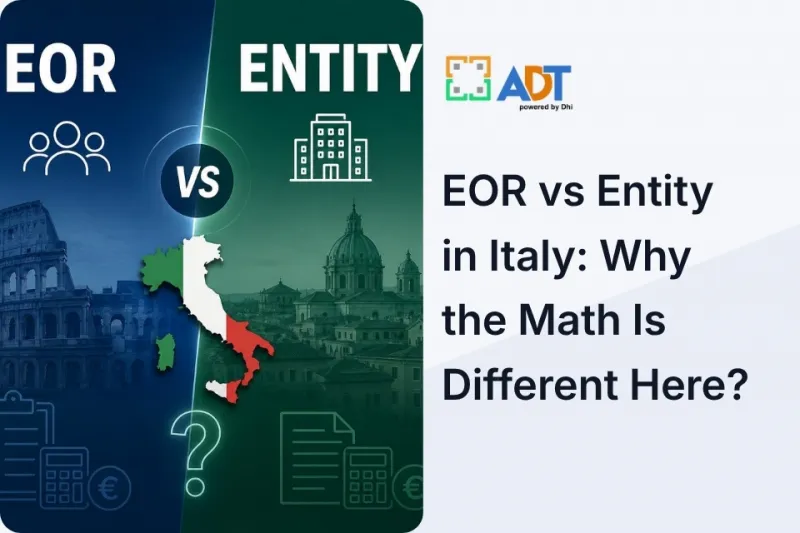
EOR vs Entity in Italy: Why the Math Is Different Here?
Most companies run the EOR vs entity decision as a spreadsheet exercise. Headcount, monthly fee, setup cost, breakeven point. That spreadsheet works fine for the Netherlands. It gives you the wrong answer in Italy. Italy has three structura...

Hiring Employees in Italy: Employment Law, Payroll, TFR & Compliance Guide (2026)
Italy is one of Europe's most significant economies and one of its most complex employment environments. For foreign companies making their first Italian hire, whether a sales lead in Milan, a technical hire in Turin, or a remote employee a...

Hiring Employees in Germany: Employment Law, Payroll, Immigration & Compliance Guide (2026)
Germany is the largest economy in the EU and one of the most complex employment environments for foreign companies to navigate. The labour law framework is detailed, the payroll obligations are layered, and the immigration infrastructure wh...

IND Recognized Sponsor vs Employer of Record: Cost, Timeline & Compliance
If you're reading this, you're probably staring at a job offer you want to extend to a highly skilled migrant in the Netherlands — and you've just discovered that hiring them isn't as simple as sending a contract. To sponsor a work permit f...
_1782993582.jpg.webp)
5 Dutch Employment Law Mistakes US & UK Companies Make (2026 Guide)
5 Things US and UK Companies Get Wrong About Dutch Employment Law (2026) If you're a US or UK company hiring your first employee in the Netherlands, or you've been operating there for a while and haven't had anyone look closely at your setu...
_1782992183.jpg.webp)
The 30% Ruling Explained: Tax Benefits for International Employees in the Netherlands
The 30% Ruling Explained: Tax Benefits for International Employees in the Netherlands Why the 30% ruling matters for your hiring strategy The 30% ruling is the Netherlands' headline tax incentive for attracting international talent. Properl...
What It Really Costs to Employ Someone in Europe: Employer On-Costs by Country (2026)
What It Actually Costs to Employ Someone in Europe: Employer On-Costs by Country (2026) Most hiring conversations in Europe start with the salary. The budget is the salary. The offer is the salary. The approval is the salary. The salary is...
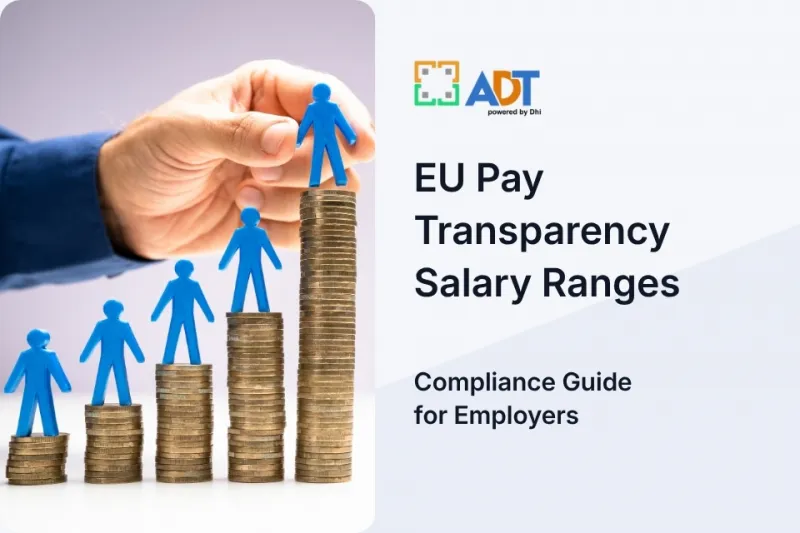
What Counts as a Compliant Salary Range Under the EU Pay Transparency Directive?
Most employers responded to the EU Pay Transparency Directive by adding a salary line to their job ads. A range that looks something like this: €40,000 to €120,000. That is almost certainly not compliant. And it is going to cause problems....
EU Pay Transparency Directive 2026: Employer Compliance Guide
EU Pay Transparency Directive: What Employers Must Know Why this is on the calendar The EU Pay Transparency Directive - formally Directive (EU) 2023/970 - must be transposed into national law by all 27 member states by 7 June 2026. From tha...
EOR vs Legal Entity in Europe: Cost, Compliance, and Hiring Decision Guide
EOR vs Legal Entity in Europe: Full Cost Breakdown for Global Employers When a company decides to hire in Europe for the first time, one question comes up before almost any other: do we set up a legal entity, or do we use an Employer of Rec...
No articles match that search. Try a different word.
Get the next guide in your inbox
New country guides, compliance updates, and cost breakdowns — sent when we publish, not on a schedule.
No spam. Unsubscribe any time.
Planning a hire in a market you don't know yet?
Tell us where you're hiring and what the role looks like — we'll map the employment law, payroll obligations, and total cost before you commit.
Book a free consultation





 experts@adtsolution.com


 Queens towers, Delflandlaan 1, 1062 EA Amsterdam, The Netherlands



