 AUG (Authorized User Group) Certified
 Nasscom Certified
 SNA Certified

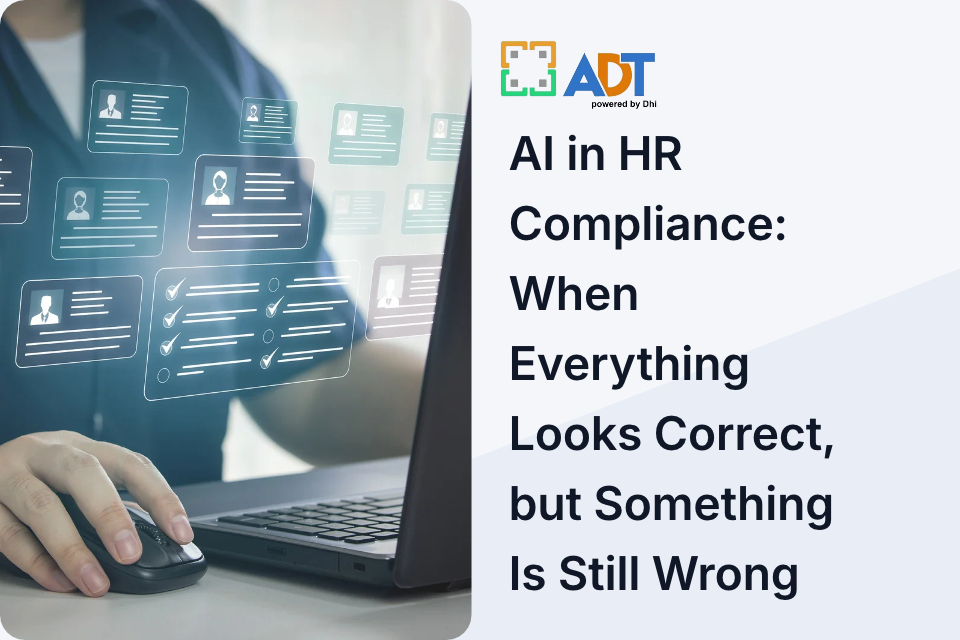
Let's say your company is hiring someone in the Netherlands.
Your HR team has prepared the employment contract, and you've used an AI compliance tool to check whether anything is missing.
The tool reviews the document and finds no obvious issues. The salary is included, the payment terms are clear, and the contract has all the sections your team expected.
So you're ready to move forward.
But then your immigration team reviews the same contract and raises a question about how part of the salary will be paid.
Suddenly, an agreement that looked completely fine needs another review before the employee's permit application can move forward.
Now imagine you're the HR Director responsible for that hire.
You'd probably want to know why the problem wasn't caught earlier, especially when you'd already checked the contract using technology.
And that's the question we want to explore.
If an AI tool can check your employment documents, why might you still need someone to review the decision behind them?
Because finding an error and understanding how a decision affects another part of the hiring process aren't always the same thing.
What can AI compliance tools actually catch?
There's a reason more HR teams are using AI in HR compliance.
If you're managing employees across several European countries, you have a lot to keep track of. Employment contracts, payroll records, permit dates and local filing deadlines can quickly become difficult to manage manually.
And technology can make that work easier.
For example, a contract review tool may flag a missing notice period, an incorrect probation clause or a section that needs attention under local rules.
A payroll system may identify an unexpected contribution amount. Another system may remind your team that an employee's residence permit is approaching its expiry date.
These are useful checks, especially when your HR team is handling dozens of employees across different countries.
But there's something we'd want you to keep in mind.
A tool can only check a rule properly when it has the right information and knows which rule applies.
It may confirm that your contract contains a salary clause. But has it also checked whether the way that salary is paid meets the requirements of the employee's immigration route?
That brings us back to the Netherlands example.
What happens when a correct contract creates a problem somewhere else?
Let's say you're hiring a highly skilled migrant in the Netherlands.
You've agreed on a salary that includes a thirteenth-month payment. Your employment contract clearly explains that this additional amount will be paid in December.
From an employment-contract point of view, the clause may be perfectly acceptable.
But here's where we'd want your HR team to check something else.
For the Dutch highly skilled migrant salary threshold, certain additional payments can count only when they meet the applicable IND requirements. A contractual thirteenth-month payment made once a year generally cannot simply be treated the same as a qualifying amount paid monthly.
So if your salary calculation depends on that annual payment to reach the required threshold, you may have a problem.
And the difficult part is that the contract itself doesn't necessarily contain an obvious drafting error.
The issue appears when you connect the employment agreement with the immigration requirements.
Think about what that could mean for your business.
Your candidate may already have resigned from their previous job. Your manager may have planned their start date, and your HR team may have arranged onboarding.
Now you need to review the compensation structure and confirm whether the permit application meets the salary requirements.
This is why what AI compliance tools can and can't do matters.
A tool that checks employment contracts against a list of required clauses may not have been designed to assess the immigration impact of every payment arrangement.
A more advanced system might catch this particular issue if it has the right rules and information.
But if your team assumes that a completed contract check also means the immigration requirements have been checked, that's where the real risk begins.
Why human expertise still matters in HR compliance
The challenge isn't that technology is unreliable or that HR teams shouldn't use it.
It's that different parts of international employment are connected.
A decision about salary can affect immigration. A contractor agreement can raise employment classification questions. A payroll figure may need to be checked against a collective agreement that applies to the employee's role.
And these connections aren't always obvious when you're reviewing one document at a time.
Take Finland, for example.
You might review an employment contract and see that the employee's monthly salary is clearly stated.
But Finland doesn't have one national statutory minimum wage that applies to every employee. Pay requirements can come from the collective agreement covering the relevant sector.
So before deciding whether the salary is appropriate, someone needs to know which agreement applies and what it requires.
The salary clause may be present and correctly written, but that doesn't tell you whether the amount meets the applicable requirements.
This is where the discussion around automation vs human judgement HR becomes important.
Technology can help your team find missing information and check known requirements. Human expertise helps you understand which requirements matter for a particular employee, role and country.
And the strongest approach isn't choosing one over the other.
It's bringing workforce technology and human expertise together before an employment decision is finalised.
This is where Dhi ADT comes in
Let's return to the company hiring a highly skilled migrant in the Netherlands.
If you came to Dhi ADT with that situation, we wouldn't start by running the same contract through another checklist.
We'd first want to understand the hire.
Which immigration route are you using? What salary have you agreed with the candidate? How is the compensation structured, and when will each part be paid?
Then we'd look at how those details fit together.
We'd review the employment and payroll information alongside the relevant immigration requirements, identify any gaps that need attention and help your team understand what may need to change before the application moves forward.
For example, if your salary calculation depends on a thirteenth-month payment that doesn't qualify towards the required threshold, we'd help you assess the implications and the available options before proceeding.
The same approach matters when you're hiring across several countries.
A contract may need to be checked against local employment rules, payroll requirements and the employee's immigration status. Looking at each part separately may not give you the full answer.
This is how we approach technology and compliance judgement at Dhi ADT.
We use technology to support the process, but we also look at the decisions that connect different parts of international employment.
Because our role isn't simply to tell you whether a document is complete.
It's to help you understand whether the employment arrangement you're planning is suitable for the country, the employee and the way your business intends to operate.
Can AI replace HR compliance judgement?
We wouldn't look at it as a question of replacing people with technology.
If your HR team is managing employees across Europe, automated checks can save time and reduce the amount of routine work they need to handle.
And as AI compliance tools improve, they may be able to assess more complex situations when they're given the right context and current legal requirements.
But someone still needs to decide whether the tool has been given the full picture.
Think about the Dutch contract again.
If the tool only knows that the salary clause is present, it may not know that the employee needs a highly skilled migrant permit or that part of the salary is paid annually.
Without those details, even a useful review can miss the question your business actually needs answered.
That's one of the most important AI compliance tools limitations to understand.
A clean result doesn't always mean every related employment, payroll and immigration requirement has been checked.
And that's why we'd encourage HR leaders to ask a different question before relying on an automated result.
Not just, "Did the system find anything wrong?"
But, "Have we checked how this decision affects the rest of the hiring process?"
That one question can help you avoid making a decision based on an incomplete review.
Before you approve your next international hire
If you're hiring across several European countries, we'd suggest reviewing how your team currently checks employment decisions.
Are your contract, payroll and immigration teams working with the same information? Does someone check how a salary or employment term affects other requirements? And when your compliance system shows no issues, does your team know exactly what has been checked?
You don't need to stop using automation. In fact, we'd encourage you to make good use of it.
But we'd also encourage you to make sure someone is responsible for reviewing the details that connect different parts of international employment.
Because AI in HR compliance is most useful when it supports informed decisions, rather than becoming the only reason a decision is approved.
If you're unsure whether your current process is catching these connections, that's something we can help you review.
Book a 30-minute workforce compliance discussion with Dhi ADT
Tell us which countries you're hiring in, how you're currently checking contracts and payroll, and where your team is facing uncertainty.
We'll help you identify which parts of the process may need closer review and where local employment expertise can support your existing systems.
The goal isn't to replace your technology.
It's to make sure the decisions you make with it also work in practice.
Get in touch with us
Netherlands (HQ): +31 97010207974
UK (HQ): +44 7401131349
Belgium: +32 460254634
Follow us on LinkedIn: https://www.linkedin.com/company/dhi-adt/
_1792582177.jpg)





 experts@adtsolution.com


 Queens towers, Delflandlaan 1, 1062 EA Amsterdam, The Netherlands



